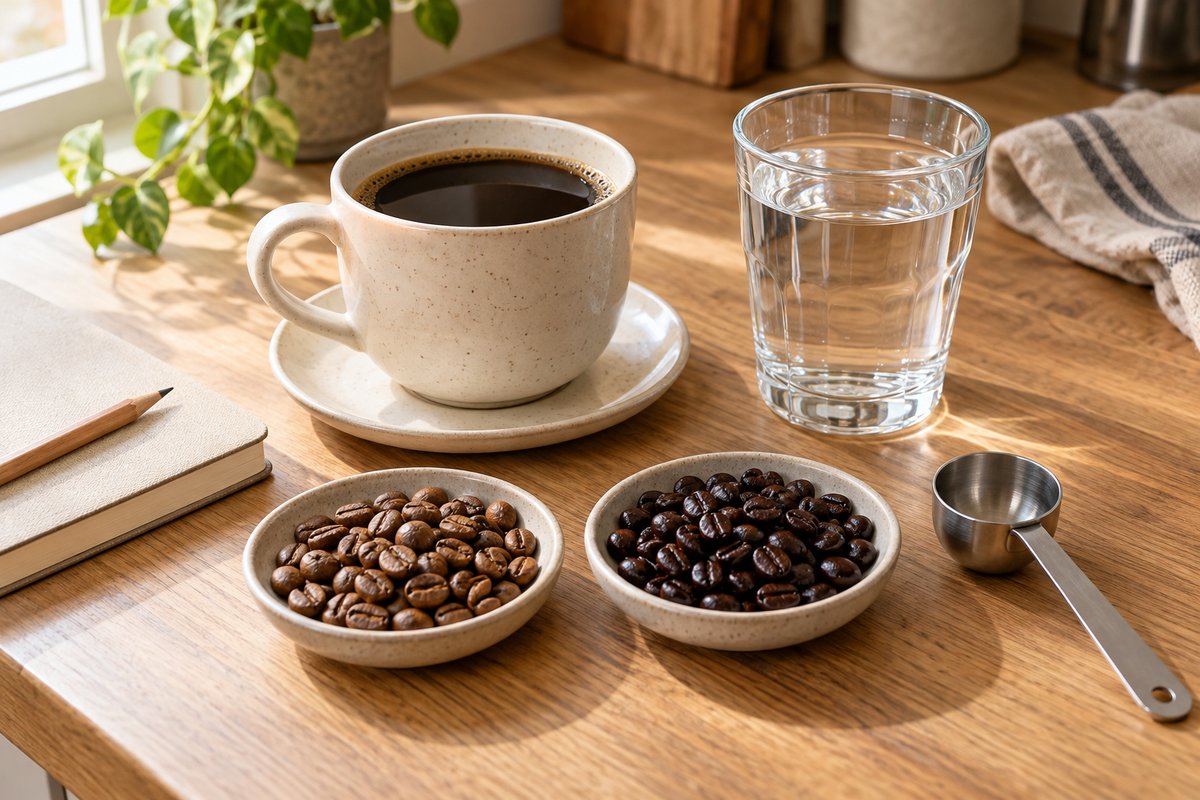
Coffee does not dehydrate regular drinkers, does not stunt growth, and does not sober you up. Dark roast does not have more caffeine, and a shot of espresso has less than a mug of drip. Most coffee myths start from something real, such as caffeine’s mild effect on the kidneys or espresso’s intense taste, and stretch it further than the evidence goes.
| Myth | Verdict |
|---|---|
| Dark roast has more caffeine | False |
| Espresso has more caffeine than drip | False, per cup |
| Cold brew pulls out more caffeine | False; it uses more coffee |
| Decaf has no caffeine | False |
| Coffee dehydrates you | False for regular drinkers |
| Coffee stunts growth | No evidence |
| Coffee sobers you up | False |
| Coffee raises cholesterol | Only unfiltered coffee |
| Boiling water burns coffee | Mostly false |
| Strong coffee is bitter coffee | False |
| Good espresso has thick crema | Not on its own |
| The fridge keeps coffee fresh | False |
| Fresher roasted is always better | False |
Caffeine
Dark roast has more caffeine
False. A dark roast tastes bolder, but roasting does not add caffeine. When researchers roasted the same green coffee to different levels and brewed each one the same way, the light and medium roasts put slightly more caffeine in the cup than the dark roast. The differences were small. Dark roast beans are also lighter and puffier, so a scoop of them holds a little less coffee by weight.
If you want more caffeine, use more coffee or choose a blend with robusta, which has roughly 1.5 to 2 times the caffeine of arabica. See which roast has more caffeine.
Espresso has more caffeine than drip
False, per cup. Espresso is far more concentrated: about 63mg of caffeine in a 1-ounce single shot, against about 96mg in an 8-ounce mug of brewed coffee. Ounce for ounce, espresso has roughly five times as much. But a shot is one or two ounces, and a mug is eight or more, so the mug usually wins. Even a double shot uses a little less coffee than a mug of drip.
Strong taste and caffeine are different things. See which coffee has the most caffeine.
Cold brew pulls out more caffeine
False. Caffeine dissolves easily in hot or cold water. Cold brew usually has more caffeine per glass because it is made with much more coffee, not because steeping it for hours extracts more. See cold brew vs iced coffee.
Decaf has no caffeine
False. Decaf removes most of the caffeine, not all of it. The FDA puts a typical 8-ounce cup at about 2 to 15mg, against about 96mg for regular coffee. That is small, but it adds up over several cups if you are avoiding caffeine for medical reasons. See how much caffeine is in decaf.
Health
Coffee dehydrates you
False for regular drinkers. Caffeine has a mild diuretic effect, mostly in people who are not used to it, and regular drinkers build up a tolerance. The water in the cup more than makes up for it. In a well-known trial (Killer, Blannin and Jeukendrup, 2014), 50 men who drank coffee every day spent three days drinking four mugs of coffee a day and three days drinking the same amount of water. Their hydration measures, including body water, blood, and urine, showed no meaningful difference between the two.
The study tested moderate amounts in habitual drinkers, so it does not prove that very large amounts behave the same way. But for most people, coffee counts toward the day’s fluids.
Coffee stunts growth
No evidence. No research has shown that coffee or caffeine makes children shorter. Much of the idea traces back to advertising for Postum, a roasted grain drink sold from the 1890s as a coffee substitute, whose ads blamed coffee for a long list of problems, including stunted growth.
That does not make coffee a good drink for children. Caffeine affects a small body more strongly, and it can disrupt sleep, which matters while children are growing. But height is not the reason.
Coffee sobers you up
False. Caffeine does not lower blood alcohol or change how fast the liver clears alcohol. It can make you feel more awake, which is the problem: feeling alert makes it easier to misjudge how impaired you are. Only time sobers you up. Never use coffee as a reason to drive.
Coffee raises cholesterol
Only unfiltered coffee. Coffee oils contain cafestol, which raises LDL cholesterol. A paper filter holds back nearly all of it, so drip, pourover, and a paper-filtered AeroPress add almost none. French press, Turkish coffee, and boiled coffee let it through. Espresso does too, though a small cup holds less of it. If your cholesterol is a concern, a paper filter is a simple change. See filtered vs unfiltered coffee.
Brewing
Boiling water burns coffee
Mostly false. Water starts cooling the moment it leaves the kettle, so water poured at a full boil is no longer at 100°C when it reaches the coffee. Many light-roast recipes call for water straight off the boil, because it extracts the sweetness that cooler water leaves behind. Very hot water can make a dark roast harsh, so let the kettle rest for a minute or so for dark roasts. See can you use boiling water.
Strong coffee is bitter coffee
False. Strength and bitterness are two separate things. Strength is how much coffee is dissolved in the cup, set mostly by the ratio of coffee to water. Bitterness usually comes from over-extraction: pulling too much out of the grounds with a grind that is too fine, a brew that runs too long, or water that is too hot for the roast. A cup can be strong and sweet, or weak and bitter. See strength is the other half, or use the Brew Compass to pick one change for a bitter cup.
Good espresso has thick crema
Not on its own. Crema is a foam of carbon dioxide and coffee oils. Very fresh beans and blends with robusta make more of it, and stale beans make less, so it says something about freshness. It says little about whether the shot tastes good. A pressurized basket makes thick crema from almost any coffee by forcing it through a single small hole. Judge the shot by taste. See dialing in espresso.
The fridge keeps coffee fresh
False. A fridge is damp and full of food smells, and coffee picks up both. Taking a cold bag in and out every day also makes water condense on the beans. Keep the coffee you are using now in an airtight container in a cupboard. The freezer works well for beans you will not use for a while, divided into sealed portions so each one comes out only once. See how to store coffee.
Fresher roasted is always better
False. Coffee is at its best for a few weeks after roasting, not the day it comes out of the roaster. Freshly roasted beans give off carbon dioxide for several days, and that gas gets in the way of an even brew, especially for espresso. Many roasters suggest waiting a few days for filter coffee and a week or more for espresso. See coffee can also be too fresh.
Two more mix-ups come up often enough to mention. Espresso is a way of brewing, not a kind of bean; see espresso beans vs coffee beans. And “low-acid” coffee barely differs in pH from any other coffee. What helps a sensitive stomach is usually a darker roast, cold brew, or milk; see low-acid coffee.