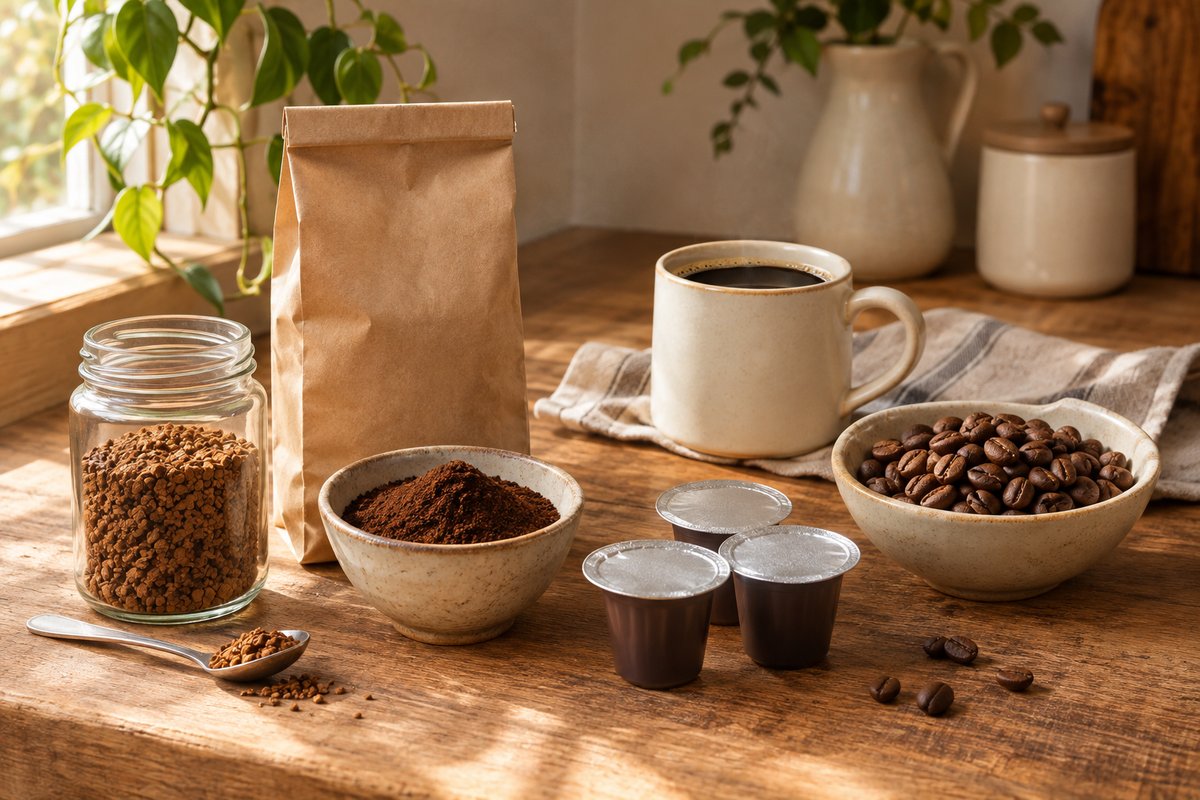
Yes. Every way of making coffee at home costs less per cup than buying it from a café, usually by several dollars. The gap between home formats is smaller but still real. At typical US prices in late 2026, an 8-ounce cup costs roughly:
| Format | Coffee in the cup | Cost per cup |
|---|---|---|
| Instant coffee | About 2g | About 11¢ |
| Supermarket ground coffee, brewed | 15g | About 31¢ |
| Reusable pod with supermarket coffee | About 10g | About 20¢ |
| Single-use pods | About 10g | About 40¢–90¢ |
| Specialty whole beans, brewed | 15g | About 79¢ |
| Espresso (double shot) from specialty beans | 18g | About 95¢ |
| A café coffee or latte | — | Usually several dollars |
These figures use example prices, set out in the prices behind these numbers below. Coffee prices have moved a lot recently, so the coffee cost calculator is the way to check them against the bag you actually buy.
How to work out your own cost per cup
The formula is the same for every format: divide what you paid by how many cups it makes. How you count the cups is the only thing that changes.
For a bag of ground coffee or beans, divide the price by the weight in grams to get the price of one gram. Then multiply by the grams you use per cup. A $15 bag weighing 12 ounces holds 340g, so each gram costs about 4.4¢. At 15g a cup, that is about 66¢ a cup. If you measure with a spoon, a level tablespoon of ground coffee is about 5g; see how much coffee per cup for the rest.
For pods or capsules, divide the price of the box by the number of pods in it. A box of 24 for $15.60 is 65¢ a pod. The button you press does not change this: a bigger cup from the same pod costs the same and tastes weaker.
For instant coffee, divide the jar price by the number of cups on the label, or by its weight in grams divided by 2. A typical serving is one rounded teaspoon, about 2g, for 8 ounces of water.
The coffee cost calculator does the bag arithmetic for you and adds up the week, month, and year.
Format by format
Instant coffee: the cheapest cup
Instant coffee is brewed coffee that has been dried to a powder, so you need very little of it for a cup. At about 2g a serving, a jar lasts a long time. It is also the most convenient: no equipment beyond a kettle.
The trade-off is flavor. Instant is usually made from cheaper beans, often including robusta, and most of the aroma is lost in drying. If price and speed matter more than taste, it is hard to beat.
Supermarket ground coffee: the best value
A brewed cup of everyday pre-ground coffee costs about three times as much as instant, but it is still well under half a dollar. It works in a drip machine, a French press, or a reusable pod. For most people, this is the cheapest way to make coffee that tastes like freshly brewed coffee.
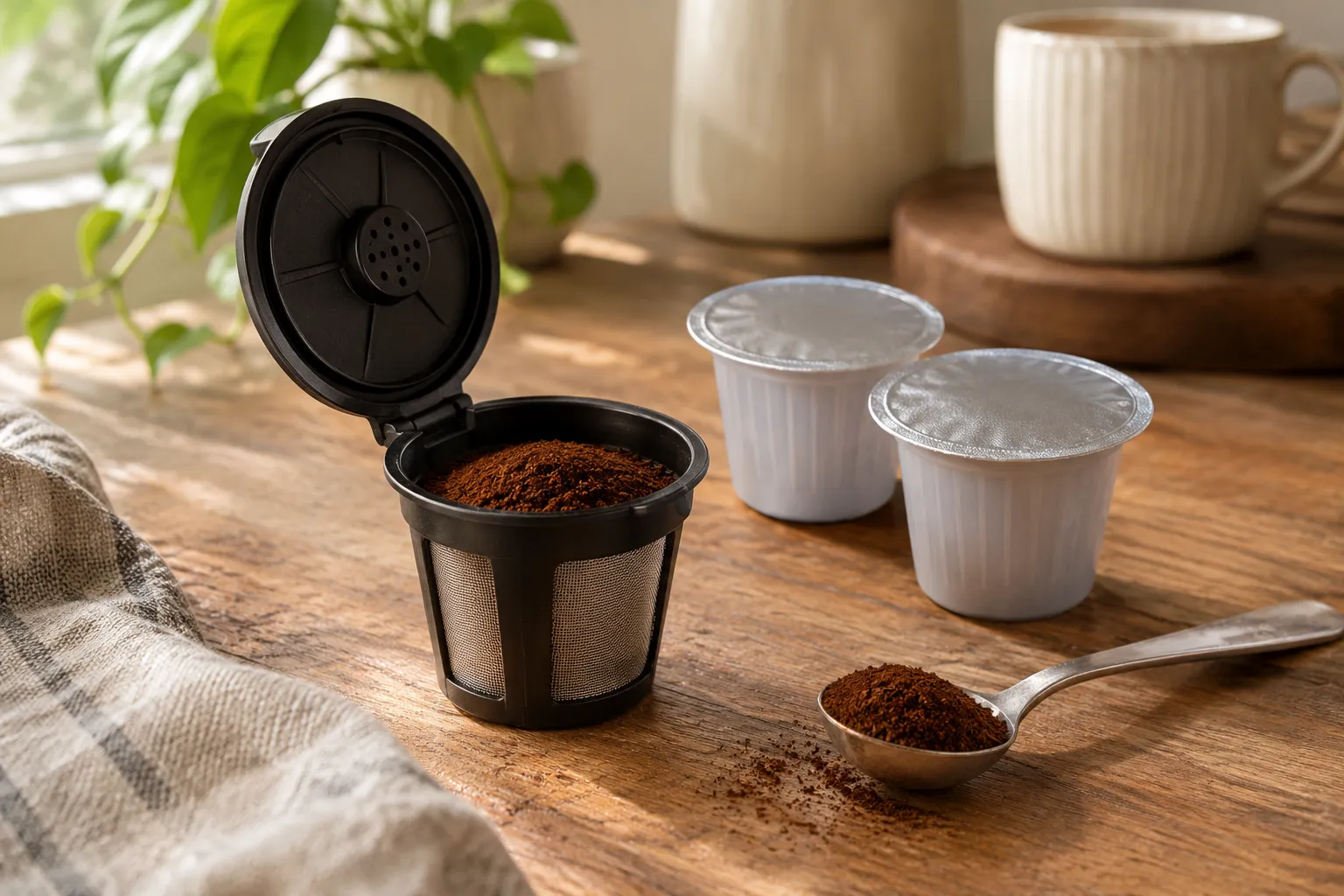
A reusable pod lets you buy coffee by the bag instead of by the pod.
Pods: paying for convenience
Single-use pods are the format where the price surprises people most. A pod holds only about 10g of coffee, which works out to roughly $18 to $40 a pound depending on the box. That is several times the price of the same coffee bought by the bag. Large bulk boxes bring the cost per pod down, toward the lower end of the range.
A reusable pod closes most of that gap. Filled with supermarket ground coffee, it costs about 20¢ a cup, and it usually tastes better because the coffee is fresher. How to make Keurig coffee taste better covers how to fill one.
Specialty whole beans: better coffee, still cheap
Whole beans from a specialty roaster cost more per gram, so a cup costs about 79¢ at $18 for a 12-ounce bag. That is about the same as a pod, for much better coffee. Grinding just before brewing keeps more of the aroma, and you choose the roast and origin. See how to read a coffee bag for what the label tells you.
Espresso and lattes at home
A double shot uses 18g of coffee, so espresso costs a little more per cup than filter coffee: about 95¢ with specialty beans, or under 40¢ with supermarket espresso beans. A latte adds milk, roughly another 20¢ to 30¢ for a typical mug.
This is where home brewing saves the most, because café espresso drinks cost the most. The machine is the real expense, which the next section covers.
Cold brew: more coffee per glass
Cold brew uses much more coffee than hot coffee. A 12-ounce glass of ready-to-drink cold brew holds about 44g of coffee, so it costs about 90¢ with supermarket coffee, or about $2.33 with specialty beans. Cold brew vs iced coffee compares it with iced coffee, which needs about half as much coffee per glass.
The equipment and the extras
The cost per cup leaves out the brewer. That matters most for espresso, where a usable machine and grinder can cost a few hundred dollars.
The arithmetic for paying it off is simple: divide what the equipment cost by what you save each day. For example, if you would otherwise buy a $5 latte every day and a home latte costs about $1.20, you save about $3.80 a day. A $300 setup pays for itself in about 80 days. If you buy a café drink once a week, it takes over a year.
Filter coffee is far cheaper to start. A French press or a basic drip machine costs less than a few weeks of café coffee. What to buy first puts the gear in the order worth buying it.
The extras are small but not zero:
- Paper filters cost a few cents each.
- Milk and sugar can cost more than the coffee in a milky drink.
- Coffee poured away was paid for too. Brewing a full pot and drinking half of it doubles your real cost per cup.
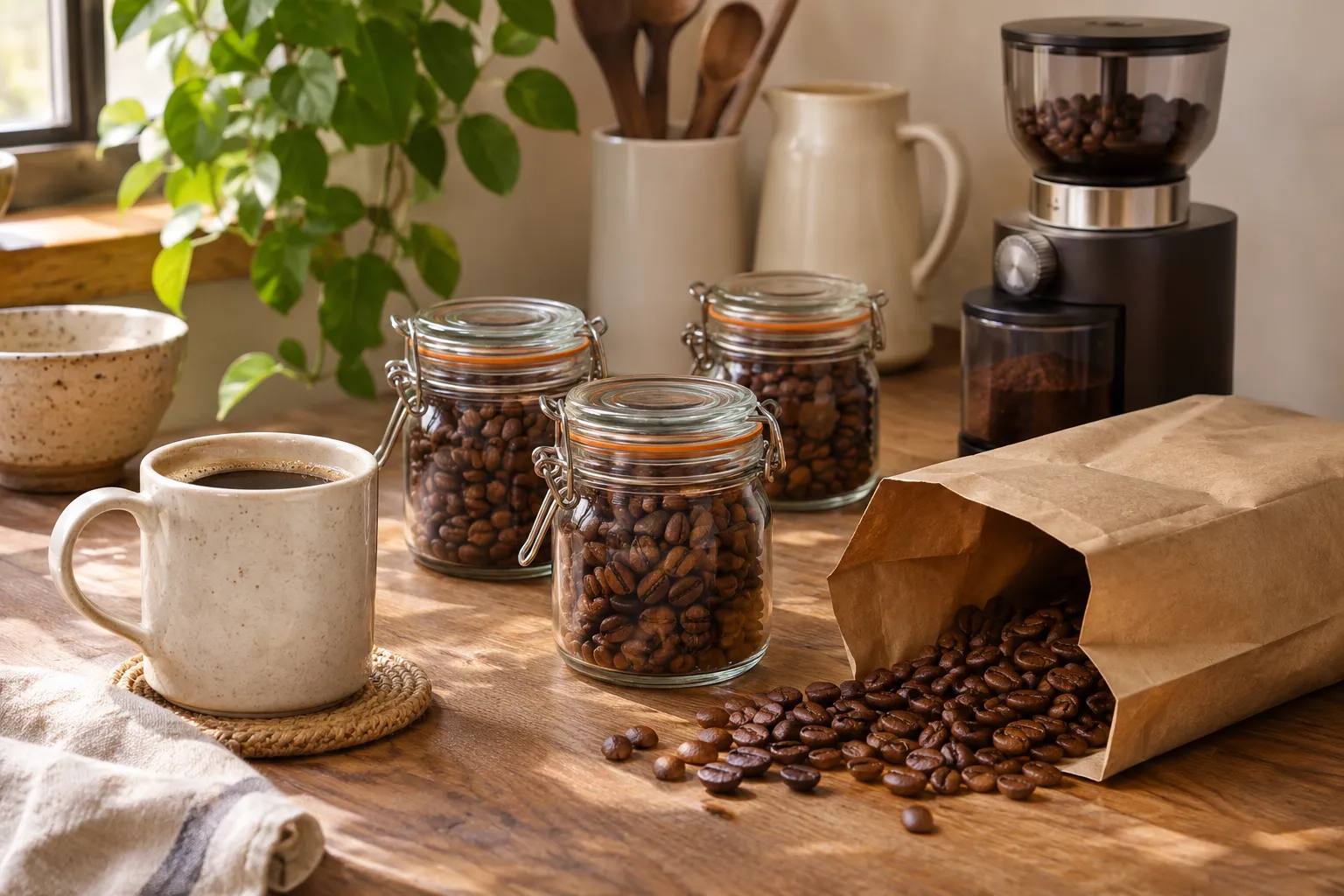
Buying a bigger bag only saves money if you use or store the coffee well.
Which bag size is cheapest?
Bigger bags usually cost less per gram, and a 2-pound bag often costs noticeably less per cup than two 12-ounce bags. It is only a saving if you finish it while it still tastes good, though.
Once a bag is open, whole beans taste best for about two weeks and ground coffee for about a week. Buy the largest size you will finish in that time. If you buy beans in bulk, freeze what you will not use soon in sealed portions; freezing ground coffee works less well. How to store coffee beans explains how.
The prices behind these numbers
The table at the top uses these US prices from late 2026. Your prices will differ, so treat them as a starting point:
- Supermarket ground coffee: $9.25 a pound, close to the US Bureau of Labor Statistics average for ground coffee in 2026, which reached record highs that year.
- Specialty whole beans: $18 for a 12-ounce bag.
- Single-use pods: 40¢ each in large bulk boxes, up to about 90¢ in small boxes of premium brands.
- Instant coffee: a jar of about 10.7 ounces for $17.59, labelled to make 162 cups.
Every cup of brewed coffee uses 15g for 8 ounces, the site’s usual 1:16 ratio. Use more coffee for a stronger cup and the cost rises in step: 20g instead of 15g costs a third more.