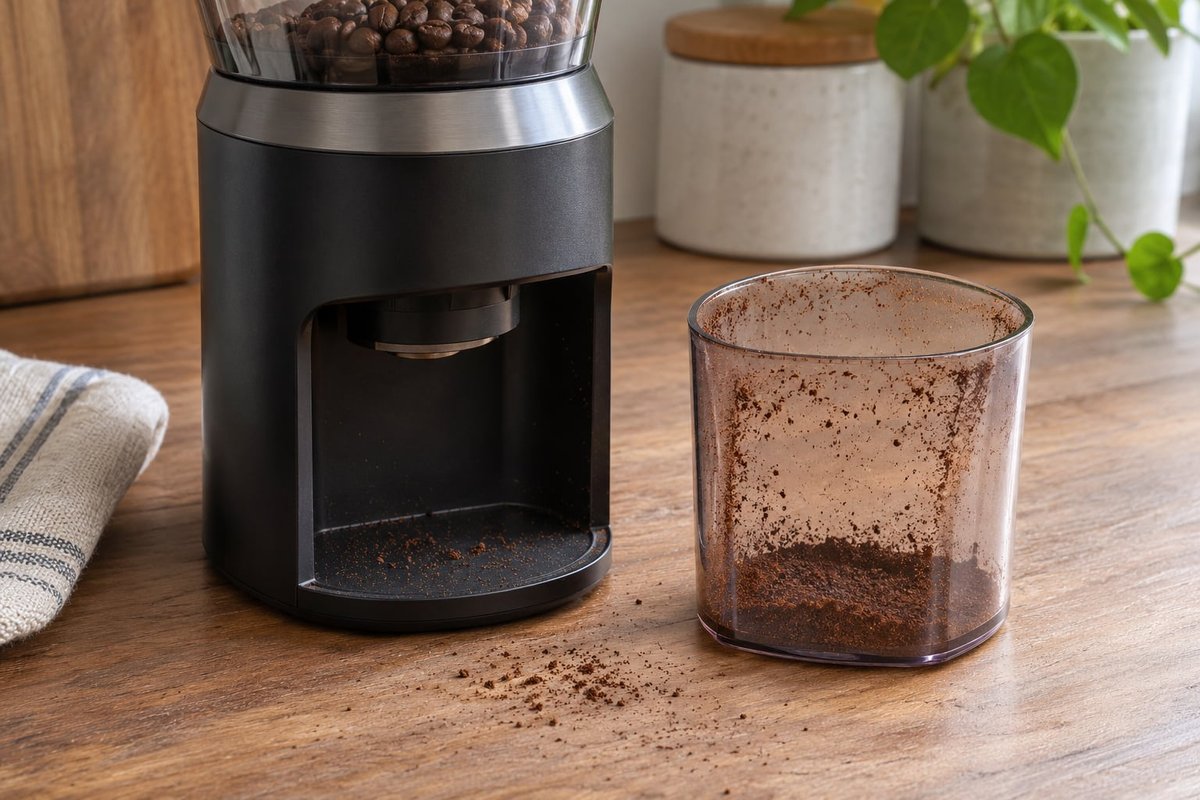
For grounds that cling or scatter, start by cleaning the catch cup and accessible chute as your grinder’s instructions allow, then give the grounds a short pause before removing the cup. For inconsistent doses, weigh what comes out as well as what goes in. Static and retention can overlap, but they are not the same measurement.
Do not pour water into a grinder or assume that every model permits dampened beans. Some makers approve a small amount of moisture on a single dose; that is a model-specific technique, not a general cleaning method. Dry maintenance is the useful first step.
Separate static, retention, and exchange
| Term | What it means | What you might notice |
|---|---|---|
| Static | Electrical charge makes particles cling or repel | Grounds stick to a cup or scatter around the chute |
| Retention | Coffee remains inside the grinder after grinding | Less collected coffee than the beans you added |
| Exchange | Old retained grounds leave as new grounds take their place | Similar input and output weights can still include older coffee |
Coffee can stay in spaces around the burrs or chute without visible static. Conversely, a messy counter does not prove a large amount is trapped inside the grinder: some of the missing dose may simply be on the counter.
That distinction prevents a common mistake. An 18g input and 18g output do not prove zero retention or perfect freshness. Some grounds might have stayed behind while older ones came out. A kitchen scale checks your collected dose; it does not reveal the age of each particle.
Measure the dose you can actually brew
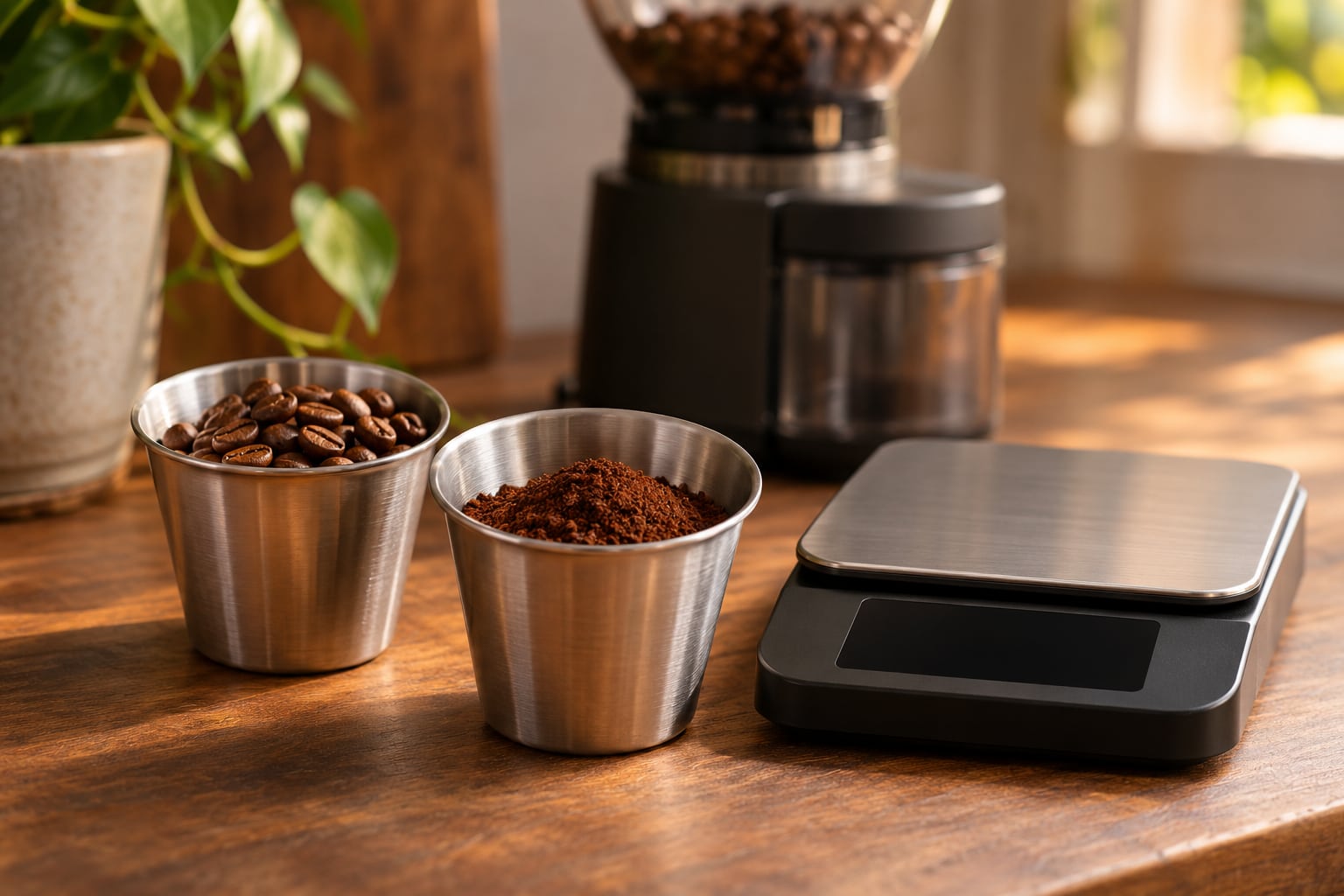
For a single-dose grinder, use this check with the same beans and setting over several normal sessions:
- Put a dosing cup on a stable scale and tare it. Weigh the beans before grinding.
- Grind following the machine’s usual operating instructions. Use its supplied knocker or bellows only as directed.
- Tare the empty receiving cup separately, then weigh the grounds you actually collected.
- Record the input, output, spills, and whether you cleaned or changed settings before that dose.
- Compare several sessions before treating a small difference as a fault.
For example, 20.0g in and 19.6g collected leaves a 0.4g difference. That can include retained grounds, spillage, chaff, and measurement error; it is not a direct laboratory measurement of retention. A scale resolving only whole grams cannot reliably distinguish small tenths-of-a-gram changes.
If you keep beans in a hopper, weigh the dose dispensed for brewing instead. Timed grinding does not guarantee identical mass with every bean or setting. The coffee-ratio calculator is most useful when you enter the coffee you actually have, not an assumed dose.
Why does static vary between bags?
Breaking and rubbing the beans during grinding can create electrical charge. Coffee properties, moisture, grind, environment, and the grinder’s design affect what you see. A different bag can behave differently without the machine suddenly failing.
The 2024 study by Méndez Harper and colleagues on mitigating electrostatic charging found that small water additions to beans reduced charging under the conditions tested. It also found that different charge-reduction methods did not produce identical grounds or espresso behavior. That supports a limited conclusion: moisture can affect static and brewing, not that every grinder should receive the same spray routine.
Do not change a good pourover grind solely to make the counter cleaner. First address the collection and maintenance routine. Grind is primarily a brewing adjustment, as the grind-size guide explains.
Clean the parts your model makes accessible
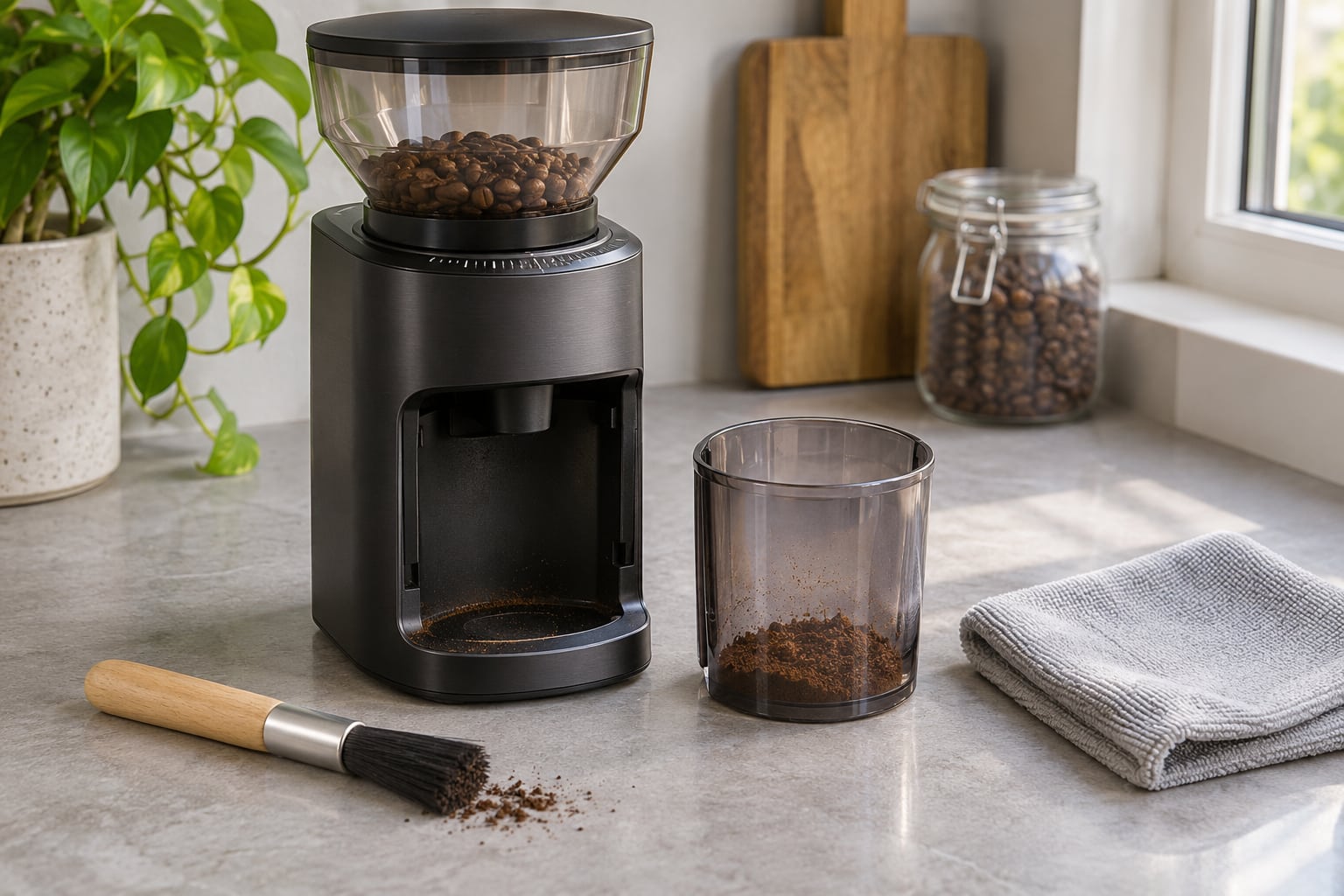
Turn off and unplug an electric grinder before brushing or removing parts. Remove the catch cup, then clean the accessible chute and burr area only as the manual describes. Do not insert fingers or tools into a running grinder, remove electrical guards, or improvise an internal modification.
On the Fellow Ode Gen 2 specifically, Fellow recommends brushing the exit chute’s anti-static prongs when grounds build up. That is a specific feature with its own procedure; it is not a reason to search for or bend similar-looking parts on other grinders.
Wash only removable parts that the maker permits you to wash, and dry them completely before reassembly. Keep the motor, burr chamber, plug, and cable dry. Use cleaning tablets only if approved for the model, and do not substitute rice or other materials. Baratza’s maintenance guidance emphasizes removing accumulated oils and particles to prevent clogs.
If output suddenly falls, the motor labors, or the machine jams, stop and follow its troubleshooting procedure. Do not keep running it to force coffee through a blockage.
Should you use the Ross Droplet Technique?
The Ross Droplet Technique, often shortened to RDT, means adding a very small amount of moisture to a measured dose of whole beans before grinding. It is intended to reduce static; it is not washing the beans or wet-cleaning the grinder.
Check the exact model’s current instructions first. Fellow’s Ode support guidance describes stirring a weighed dose with a damp spoon handle before grinding and explicitly warns against pouring water into the grinder. Do not transfer that permission to a different brand or model.
If your maker permits the technique, follow its method and amount. Prepare only the dose you will grind immediately. Do not spray a hopper full of stored beans, wet the electrical machine, soak the burrs, or leave damp beans waiting inside it. If the manual is silent, ask the manufacturer or keep the routine dry.
Moisture can change how particles clump and how an espresso shot flows. After changing the preparation routine, hold the other variables steady and reassess the cup. Do not assume less mess means the old grind setting will produce exactly the same shot.
Use the smallest useful fix
| Problem | First useful step |
|---|---|
| Grounds cling to the cup | Clean and fully dry the permitted removable parts |
| Grounds fall out after removing the cup | Allow a short pause; follow the model’s clearing routine |
| Collected dose varies | Weigh output over several sessions |
| Static worsens on a model with anti-static parts | Perform the maker’s specified maintenance |
| Large or sudden loss of output | Stop and check for a clog or assembly problem |
Use grinder settings for the brewing adjustment and coffee troubleshooting for taste. The goal is a repeatable collected dose and a clean, functioning grinder. Chasing a display reading of exactly zero loss is less useful than knowing what reaches your brewer every morning.